

For Chinese families, the Spring Festival is much more than a holiday. It is the most important time of the year—a time when millions of people travel home, families reunite, and dinner tables are filled with dishes that carry memories, traditions, and hopes for the year ahead. In recent years, one dish has become a familiar presence on my family’s Spring Festival Eve dinner table: Ecuadorian shrimp, served.
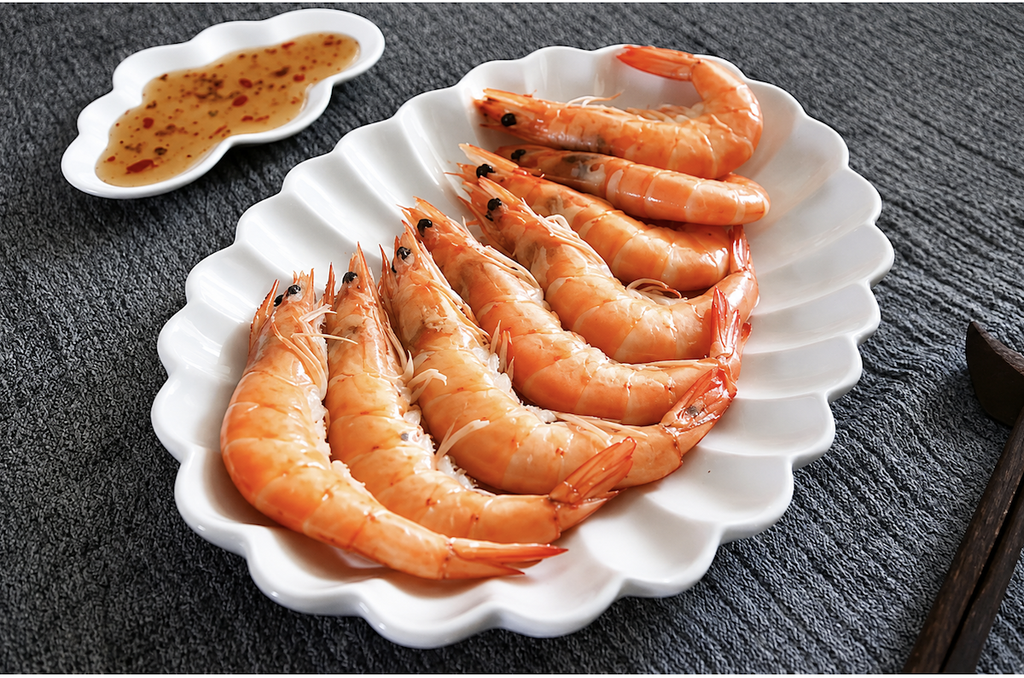
at perhaps the most important meal of the year
Every year, as the Spring Festival approaches, I make sure to buy several boxes of Ecuadorian white shrimp and store them in the freezer, ready to be served when my family gets together. When the shrimp hit the hot wok and their shells turn bright red, they pair perfectly with the traditional dishes on our table.
There is something almost unexpected about it. The Chinese New Year is a tradition that dates back thousands of years, yet one of the foods that has found its way into our modern celebration comes from a country more than 15,000 kilometers away.
And I am hardly alone. For millions of Chinese families, Ecuadorian shrimp have quietly become part of the Spring Festival feast. Supermarket freezers are filled with boxes of them, while online sellers promote them as a holiday necessity. A food from the other side of the world has somehow found its place in one of China’s most traditional family celebrations.
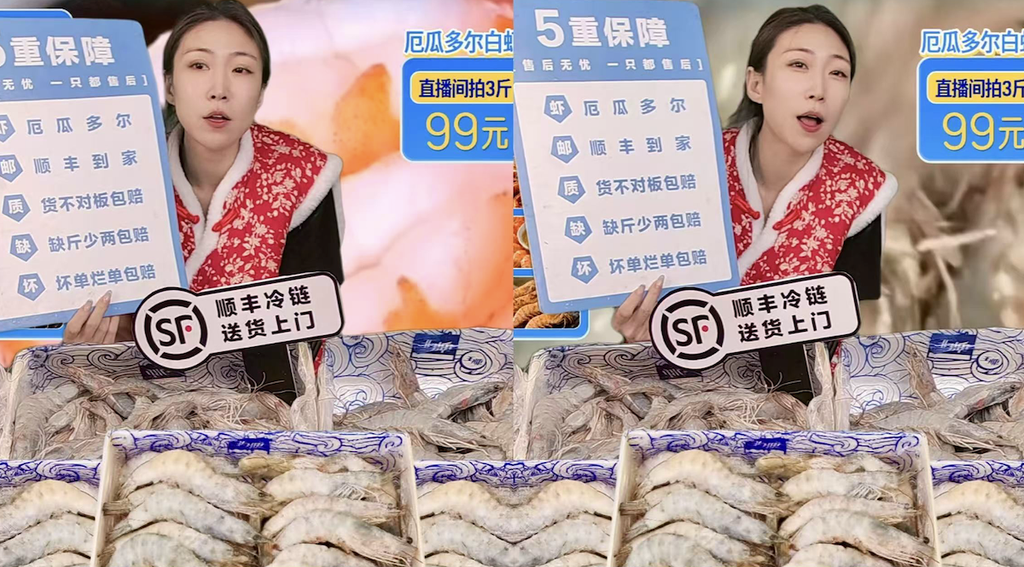
A Chinese influencer promotes Ecuadorian shrimp through a livestream
For me, the reason is simple: they are delicious. The shrimp are sweet, firm, and satisfying, while their bright red color fits perfectly with the festive atmosphere of the New Year.
For many others, this high-protein, low-fat food has become a favorite choice, especially among China’s growing number of health-conscious consumers. Adding to their appeal, Ecuadorian shrimp are often more affordable than same-sized products imported from other countries.
But I sometimes wonder: how did shrimp from Ecuador end up becoming part of China’s biggest holiday?
For years, China has remained Ecuador’s largest shrimp export market, accounting for roughly half of its shrimp exports.
That transformation did not happen overnight. In 2017, Ecuadorian shrimp were still a relatively small presence in the Chinese market, with only around 15,000 metric tons imported, valued at about $110 million. A turning point came in December that year, when China lowered tariffs on some shrimp imports from 5 percent to 2 percent, creating more favorable conditions for Ecuadorian producers.
From there, Ecuador’s shrimp exports to China entered a period of rapid growth. By 2019, China’s imports of Ecuadorian shrimp had surged to around 320,000 metric tons, driven not only by tariff reductions but also by China’s strengthened efforts to crack down on shrimp smuggling. In 2025, Ecuador exported more than 650,000 metric tons of shrimp to the Chinese market, with a value of around $3.2 billion.
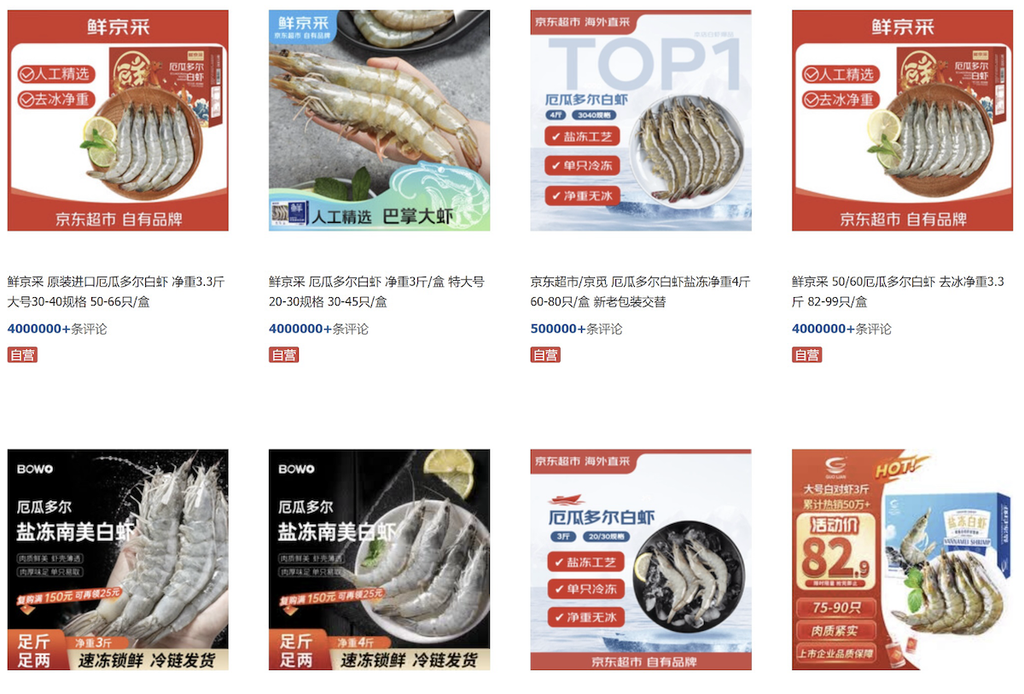
Ecuadorian shrimp featured on a Chinese online shopping platform with some receiving hundreds of thousands of reviews
For Chinese families, Ecuadorian shrimp are something to put on the dinner table. For Ecuadorian families connected to the shrimp industry, the Chinese market represents jobs, income, and opportunity.
The China-Ecuador Free Trade Agreement, which entered into force in May 2024, has further strengthened this connection. Under the agreement, tariffs on around 90 percent of tariff lines are gradually being eliminated, with tariffs on Ecuadorian white shrimp scheduled to fall to zero.
We often talk about trade through billions of dollars, tonnes of cargo, and tariff rates. But sometimes, trade is much simpler: an Ecuadorian farmer raising shrimp in a pond, a ship crossing the Pacific, and eventually, a Chinese family sitting down for its most important dinner of the year.
So when I put Ecuadorian shrimp on my Spring Festival Eve table, I will still think first about the taste. But I will also think about the extraordinary journey behind it.
For Ecuador, a shrimp may be an export. For me, it is dinner. And during the Chinese New Year, it becomes something more: a little piece of Ecuador that has traveled halfway around the world and found a place at the heart of an ancient Chinese tradition.
(Written by Quanbin Zheng, a Chinese journalist and food lover)


